
5 Biblical Examples of Innovation and Creativity: Lessons for Faith-Driven Entrepreneurs

Innovation is not a modern concept—it’s a divine one. From Genesis to the letters of Paul, the Bible is filled with inspired solutions to complex challenges. For faith-driven entrepreneurs, these accounts offer more than encouragement—they provide blueprints for godly innovation in the marketplace today.
Creativity in Action Through Scripture: Why Innovation Matters for Faith-Led Leaders
Innovation isn’t just about new ideas—it’s about responding to challenges with Spirit-led creativity that glorifies God and serves people.
The Role of Creativity in God’s Character
God was the first Creator. He “formed the earth,” “spoke light into existence,” and “breathed life” into man. As image-bearers (Genesis 1:27), we’re wired with that same creative nature, called to steward and cultivate the world around us.
“In the beginning God created the heaven and the earth.” – Genesis 1:1 (KJV)
What the Bible Reveals About Problem-Solving and Innovation
Scriptural problem-solving isn’t about quick fixes—it’s about discernment, obedience, and faith in action. Biblical innovators demonstrate spiritual insight, bold execution, and a readiness to obey divine instruction, even when it defies logic.
How Scripture Inspires Modern Business Creativity
Whether you’re launching a startup or managing a mature business, these stories offer principles for strategic thinking, stewardship, and Spirit-directed risk-taking. To explore further, check out Unlocking Creativity in Business.
Noah and the Ark – Innovative Obedience in Uncharted Territory
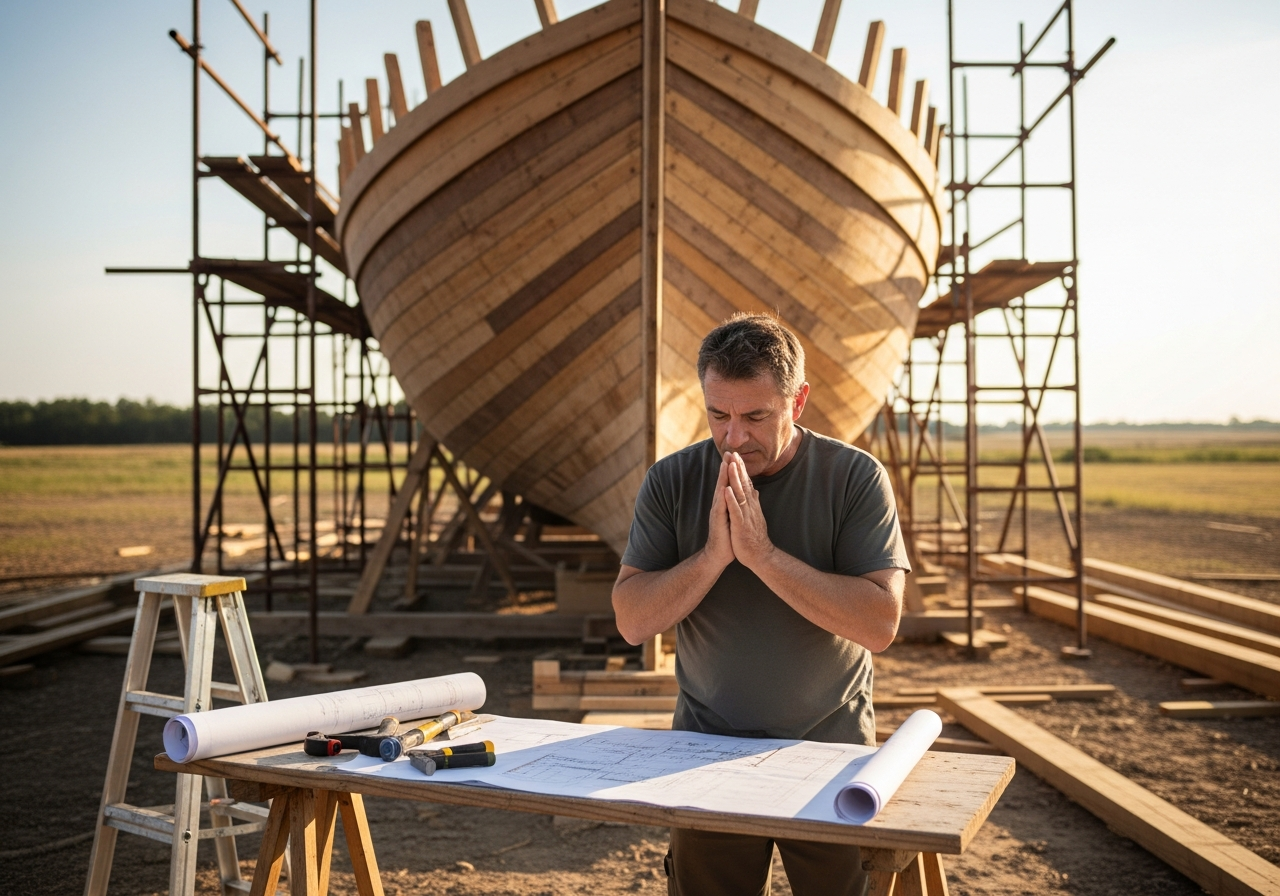
Noah’s story is one of project management led entirely by faith and creativity under divine instruction.
The Challenge: A Flood Without Precedent (Gen 6)
The world had never seen rain, let alone a flood of global proportions. Noah faced the challenge of building a massive vessel in faith with no prior model or technical precedent.
“Make thee an ark of gopher wood; rooms shalt thou make in the ark, and shalt pitch it within and without with pitch.” – Genesis 6:14 (KJV)
The Creative Solution: Divine Blueprint, Human Execution
Noah followed God’s specific instructions to the letter. Materials, dimensions, even the strategy of gathering animals—all required attention, logistics, and practical ingenuity.
Modern Takeaway: Project Management Through Faithful Obedience
For today’s Christian entrepreneurs, Noah models big vision execution under divine guidance. When launching bold initiatives, align to God’s voice, prepare exhaustively, and obey thoroughly.
Explore more principles of obedience-led innovation in our article Bible Verses About Innovation.
Joseph in Egypt – Economic Innovation Through Foresight

Joseph’s rise from prisoner to Prime Minister hinges on visionary leadership empowered by spiritual discernment.
The Challenge: National Crisis from Impending Famine (Gen 41)
Pharaoh was troubled by prophetic dreams warning of a devastating economic downturn. The kingdom needed a solution quickly.
“Now therefore let Pharaoh look out a man discreet and wise, and set him over the land of Egypt.” – Genesis 41:33 (KJV)
The God-Inspired Strategy: Storage and Stewardship
Joseph responded with a bold policy: stockpile surplus during years of abundance, then ration and redistribute during years of famine. It was a masterclass in crisis management.
Business Insight: Strategic Planning with God-Given Wisdom
This is one of the most profound scriptural examples of problem-solving. Entrepreneurs today can learn the value of forecasting, resource stewardship, and Spirit-led strategic planning. Read about today’s stewardship challenges.
Bezalel and Oholiab – Spirit-Empowered Craftsmanship for Sacred Work

Creativity isn’t just about ideas—it’s about craftsmanship and excellence that honors God in every detail.
The Divine Commission: Building the Tabernacle (Ex 31, 35)
God chose Bezalel and Oholiab to lead Israel’s Tabernacle construction. This wasn’t just a display of talent—it was a divine appointment with spiritual significance.
“And I have filled him with the spirit of God, in wisdom, and in understanding, and in knowledge, and in all manner of workmanship.” – Exodus 31:3 (KJV)
Creativity with Purpose: Design Led by the Holy Spirit
Their work included metalwork, embroidery, and precise design—all for God’s dwelling place. It highlights how the Holy Spirit empowers practical, detailed work for kingdom impact.
Entrepreneurial Reflection: Skill, Calling, and Creativity in Business
Christian business leaders are called not just to build profit, but to build purpose. Are your leadership and creativity Spirit-empowered? Learn more in What the Bible Says About Creativity.
David’s Creative Battle Plan – Outsmarting Goliath with Faith-Fueled Innovation
David’s victory over Goliath wasn’t just brave—it was strategic, innovative, and faith-driven.
The Challenge: A Giant with Traditional Weapons (1 Sam 17)
Saul and his army were paralyzed by fear. Goliath’s size and armor rendered traditional military approaches useless.
The Strategy: Refusing the Norm, Embracing God-Given Tools
David rejected the king’s armor. Instead, he used what he knew: a sling and five smooth stones. He operated within his divine strengths, not cultural expectations.
“Then said David… I come to thee in the name of the LORD of hosts.” – 1 Samuel 17:45 (KJV)
Business Takeaway: Use Unconventional Strengths with Spiritual Confidence
Your uniqueness is a divine tool. Marketplace leaders must discern their God-given niche, rather than conforming to worldly standards. Embrace creative courage. For more, see Scriptures on Adaptability and Innovation.
Paul’s Adaptive Ministry – Evangelistic Innovation Without Compromising Truth
Paul mastered cultural intelligence without compromising theological truth—a model for entrepreneurial messaging today.
The Challenge: Reaching Diverse Audiences (1 Cor 9:22)
The early church spanned Jews, Greeks, scholars, and pagans. This spectrum presented challenges in outreach, especially without modern media tools.
“I am made all things to all men, that I might by all means save some.” – 1 Corinthians 9:22 (KJV)
The Method: Cultural Relevance, Eternal Message
Paul tailored his method without changing his message—using tentsmanship, debate in public squares, and letters to spread the gospel digitally before the digital era.
Application for Leaders: Adaptation and Creative Communication in Marketplace Mission
If your business serves clients across cultures or sectors, learn the language of your audience. Channel Paul’s mindset for branding, sales, and outreach today. Also, explore wisdom in leadership.
Conclusion – What We Learn from These Biblical Innovators
Faith-driven innovation isn’t about novelty—it’s about solving real problems under God’s guidance. Like Noah, Joseph, Bezalel, David, and Paul, you are called to creatively respond to challenges, uphold integrity, and walk in purpose. Don’t overlook the practical value of Spirit-led strategy in your business.
Need prayer? Want a toolkit of scriptures, frameworks, and insights tailored for Christian entrepreneurs? Visit our resource center at businessscriptures.com/resources/?utm=blogfooter.
Recommended Reading
- Biblical leadership principles for modern business
- Some Lessons To Learn From 2 Chronicles 2
- Challenges faced by Christian entrepreneurs?
- 👑 Godly leadership isn’t about position, but the wisdom to …
- Emotional Intelligence and Wisdom in Christian Leadership
FAQ
- Who was creative or innovative in the Bible?
Several figures demonstrated creativity and innovation, including Noah, Joseph, Bezalel, David, and Paul. Each used God-given wisdom to solve unique problems. - What is an example of innovation in Scripture?
Joseph’s plan to store grain during years of plenty to prepare for famine is a clear example of economic innovation in Genesis 41. - How did biblical figures use creativity to solve problems?
They responded to challenges with divine insight, strategic planning, skillful execution, and faith-led action rather than relying on status quo methods. - What can Christian entrepreneurs learn from biblical creativity?
They can glean how to navigate uncertainty, steward resources, communicate effectively, and build businesses anchored in purpose and calling.